Wednesday, November 7, 2012

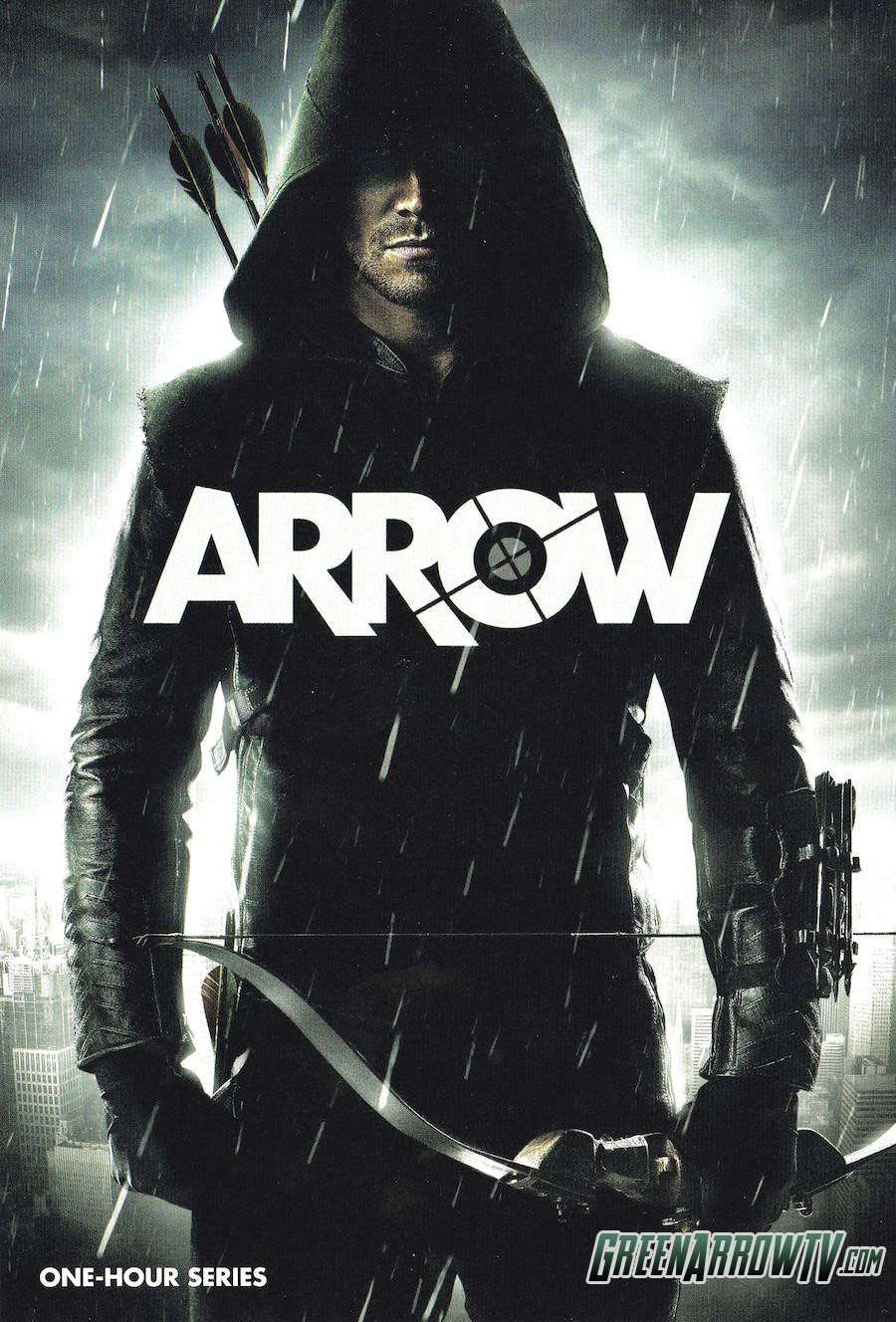
Arrow, The New TV Show....

Arrow is the story of “billionaire playboy” Oliver Queen, who lived his life in debauchery until his father’s yacht had a fatal crash and Oliver was lost on a brutal island for five years. While there, he learned to survive and worked a lot on his abs. Most important, he learned how to make and shoot arrows plus develops some cat-quick jumping skills that he mixes in with all kinds of non-gun-related badassery.

Finally rescued, he comes home with a new mission - which honestly is a little vague. He wants to “save his city”- the fictional Starling City. His family’s money had a lot to do with the downfall of the place, and there’s some as-yet-unexplained mythology that his dad passed down to him via a book with names in it. Just a guess from the pilot, but if your name is in that book, Arrow is going to put the hurt on you.

All of this fits perfectly with The CW’s love of superheroes and hunks. Arrow stars Stephen Amell, and he’s got the abs of steel, the good-looking mug and athletic ability. And he fires off any number of arrows of varying makes. Some kill you, others don’t. Some blow up. Others penetrate concrete and stick there. Have a 7-year-old boy make a list of awesome arrows, and they are pretty much in this show.

The show comes from executive producers Greg Berlanti, Marc Guggenheim, Andrew Kreisberg and David Nutter. Guggenheim and Kreisberg wrote the pilot, and Nutter directed it.

Now, the show has a plot, too. Oliver had a girlfriend named Laurel Lance (Katie Cassidy), but the naughty party boy took Laurel’s equally hot sister on the fatal yacht trip. And she died.

The CW's latest drama, Arrow, proves to be both on-brand and entertaining - if you turn off the snark detector and downplay the need for plausibility or logic. But hey, it seems that’s what makes The CW tick, at least from a distance, so going all-in on Arrow is easier than expected.

You don’t have to be a DC Comics nut to realize Arrow essentially is Green Arrow, though some liberties have been taken with the overall story. You can argue it out among yourselves whether Arrow nails the details or just the spirit of Green Arrow, but the fact is, not that many people know of the superhero avenger anyway, so nevermind all that.


Monday, November 5, 2012

The Wonder Woman...!

The film begins in straightforward fashion, detailing the history of the character who was created by Dr. William Moulton Marston in 1941 just as women were entering the workforce in droves because of World War II. Envisioning a matriarchal society to come in the next hundred years, the eccentric Marston was also an inventor of an early version of the lie detector, which no doubt inspired Wonder Woman’s “lasso of truth.”

Although Wonder Woman’s popularity declined in the ‘70s, especially when D.C. Comics took the unfortunate step of briefly stripping her of her powers, she hit her pop culture zenith with the hit television series starring Lynda Carter, one of the film’s many interview subjects.
Besides Carter, who clearly still relishes the popularity she enjoyed as the character, the film also includes interviews with figures ranging from academics to feminist icon Gloria Steinem, as well as comic book fans, including one guy dressed as a Star Wars character who credits the character for “helping teenage boys through puberty.”
The film falters somewhat when it ambitiously but superficially branches out into explorations of such similarly female-oriented film and television shows as The Bionic Woman, Charlie’s Angels, Buffy the Vampire Slayer and even Thelma and Louise. But its fast pacing and clever use of comic book-style graphics make the sometimes heavy-handed educational content go down easy.

A Film on Abraham Lincoln..

Concentrating on the tumultuous period between January 1865 and the conclusion of the Civil War on April 9 and Lincoln's assassination five days later, on Good Friday, this is history that plays out mostly in wood-paneled rooms darkened by thick drapes and heavy furniture and, increasingly, in the intimate House chamber where the strength of the anti-abolitionist Democrats will be tested against Lincoln's moderates and the more zealous anti-slavery radicals of the young Republican Party.

Occasionally, there are glimpses of life outside the inner sanctums of government, first on the battlefield, where black Union troops join in the vicious hand-to-hand combat where the mud renders the gray and blue uniforms all but indistinguishable, then in the dusty streets of the nation's capital and in the verdant surrounding countryside

The stiffest challenge was to lay out enough exposition in the early going to give viewers their bearings while simultaneously jump-starting the film's dramatic movement. Quite a bit of information simply has to be dropped in quickly to get it over with  but the estimable playwright who won a Pulitzer for 1992's Angels in America mostly manages to cover so many mandatory issues by plausibly making them the subjects of the characters' vivid conversation.
Particularly helpful in this regard are the intimate talks between Lincoln (Day-Lewis) and his most valued adviser, Secretary of State William Seward (David Strathairn), as well with his party's founder Preston Blair (Hal Holbrook). Having signed the Emancipation Proclamation in 1863 and gotten easy Senate passage of the 13th Amendment the previous April, Lincoln is determined to push the House to act quickly and put his signature on the new law by Feb. 1, before the war is likely to end. What follows is a course in political persuasion in all its forms: cajoling, intimidation, promises, horse-trading, strong-arming and intellectual persuasion, down-home style. In conversation and physical movement, Lincoln is a deliberate fellow who takes his time, a country lawyer whose rumpled exterior conceals abiding principles and an iron will, a man of no personal vanity or fancy education who is nevertheless unafraid to cite Euclid, notably in his equation of equality = fairness = justice, with which Lincoln frames the slavery issue

Sunday, November 4, 2012

Silent Hill: Revellation ....

Arriving six years—a cinematic eternity—after the first adaptation of the popular videogame series, this installment seems all too aware that only the most rabid gamers will possibly remember anything of the 2006 original, so writer/director Michael J. Bassett helpfully provides numerous scenes in which the characters deliver reams of exposition so that the rest of us can try to figure exactly what the hell is going on. It’s a losing proposition. 


 Suffice it to say that the little girl in the original is now eighteen and has assumed a new identity as Heather (Adelaide Clemens), living on the run with her father Harry (Sean Bean) from the evil forces of the town of Silent Hill who have claimed her mother (Radha Mitchell). Living with endless nightmares, both waking and dreaming, she comes home one day to find her father gone and the message “Come to Silent Hill” written in blood on the wall, forcing her and new high school friend Vincent (Kit Harington) to journey to the ash-drenched hellscape to rescue him.
Cue an endless series of nightmarish images adapted from the game, featuring a plethora of creatures engaging in gory, R-rated mayhem, ranging from homicidal nurses to a spider-like figure who turns people into mannequins to a pyramid-headed guy wielding a blade that seems entirely too heavy for him. Oh, and cameos by the likes of the slumming Carrie-Anne Moss and, most entertainingly, Malcom McDowell, the latter no doubt ruefully recalling that he once worked with the likes of Stanley Kubrick and Lindsay Anderson. Director Bassett (Solomon Kane) clearly knows his way around the fantasy genre, and the imagery, much of it lifted from the games, is visually arresting, especially the 3D-enhanced swirling ash that seems to literally envelop the viewer. At other times, he indulges too heavily in the format’s in-your-face aspects, thrusting swords and the like directly at us as if it was still the 1950s.

Ice Age Live, A Mammoth Adventure....!!

 Co-directed by Guy Caron and Michael Curry, whose past credits include Cirque du Soleil, the show incorporates giant animal puppets, human acrobats and ice-skating dance numbers.

The plot is only tangentially related to the movies. It opens with cute baby mammoth Peaches being kidnapped by an evil hawk-like creature called Shadow, an all-new character in the Ice Age pantheon. Her father Manny sets off to rescue Peaches, aided by two other series regulars, the comedy sloth Sid and the saber-toothed smilodon cat Diego, with occasional cameo appearances from the super-sized squirrel Scrat. Their mission is successful, but on the way home the team encounter avalanches and rockfalls, diverting them into a kind of fantasy underground kingdom.
The character design is the most impressive aspect of Ice Age Live!, especially the three mammoths, giant constructions who move using a combination of internal human operators and animatronics. Several of the acrobatic musical numbers are also spectacular, particularly a quartet of dancing polar bears, a Bollywood-style set-piece inside a giant flower, and a team of arctic foxes whirling across the ice like vintage Busby Berkeley babes. None of these has much relevance to the plot, nor to the Ice Age films in general, but at least they add visual zing to a fairly slight story. Otherwise, however, this production feels woefully basic for such a major movie spin-off. Framed by a broad arch of glacial ice, the uninspired stage backdrop is a series of almost interchangeable, digitally projected landscapes. The stage itself is a rectangular skating rink filling almost half the main floor of Wembley Arena, although most of the action takes place on a series of moving platforms on top of the ice. The musical score, a mix of anodyne soft-rock ballads and rousing orchestral tub-thumpers in sub-Elmer Bernstein mode, is adequate but unmemorable

Saturday, November 3, 2012

'The Man With the Iron Fists', a Cocktail of Varied Styles of Martial Arts

 
A boiling pot of wild martial arts moves culled from dozens (maybe hundreds) of violent Asian action extravaganzas as sifted through a Tarantino-esque fanboy prism, The Man With the Iron Fists feels like both a lavish vanity project and an earnest attempt to deliver a compendium of cool hand-to-hand combat set pieces. The vogue for kung fu, elaborate wire work and fancy blade flashing seems rather past its due-date at this point, making director RZA's realization of his childhood enthusiasms feel a bit quaint, but you certainly can't say it's dull or uneventful.
A cocktail blending aspects of the Chinese wuxia martial arts genre and the Japanese jidaigeki itinerant samurai/craftsman/peasant format, the Shanghai-shot Iron Fists features more lavish production values than most of its precursors as well as an odd but appealing stew of international actors including Russell Crowe as a British mercenary, Lucy Liu as an all-knowing brothel madame, World Wrestling Entertainment star David Bautista as an invincible warrior and RZA as Blacksmith, a former slave who crafts exotic weapons for one and all.
 
The aptly named Jungle Village is like a Chinese Deadwood, the baddest town on the frontier where anything goes and outlaws roam free. The simple setup has a clan chief betrayed and killed for his horde of gold by his sadistic militia leader Silver Lion (Byron Mann). Rampaging and killing as they please, Silver Lion and his animalistic top fighter Bronze Lion (Cung Le) threaten to bring Jungle Village to its knees, but handsome rightful heir Zen Yi, The X-Blade (Rick Yune), Crowe's hedonistic Jack Knife and Blacksmith form a Leone-esque ad hoc band of loners each whom has his own reasons for getting back at Silver Lion.

This is the sort of film where the main characters are defined first and foremost by what type of weaponry they favor: for Jack Knife, it's a fancy combo of gutting knife and pistol; The X-Blade sports a sleek outfit concealing an endless array of sharp objects and projectiles beneath black leather; and Blacksmith fashions for himself forearms and hands of spiked metal, which would qualify him as a uniquely qualified opponent for the mega-fisted title character in the simultaneous release Wreck-It-Ralph.

'Wreck-It Ralph', The Cartoon......

Guided by executive producer John Lasseter, Walt Disney Animation Studios has clearly devoted significant resources and talent to Wreck-It Ralph, recruiting a top-notch cast and a diverse array of animation, visual effects and lighting artists to contribute to the distinct and varied vid-game styles. With a mix of retro eye-candy for grown-ups and a thrilling, approachable storyline for the tykes, the film casts a wide and beguiling net.  
 
After 30 years of taking the blame, Ralph’s ready for a change – he thinks maybe if he can earn a medal, the Nicelanders might give him some respect and invite them to one of their frequent cocktail parties. 
 
Traveling through the arcade’s power cords and surge protectors, Ralph journeys to Game Central Station, the gateway to every game in the store. Hearing that first-person shooter challenge “Hero’s Duty” awards a medal for bravery, Ralph suits up to join no-nonsense Sergeant Calhoun’s (Jane Lynch) platoon to battle the Cy-Bugs, a nasty computer virus in the form of cyber spiders.
 
 
Following an unpleasant encounter with Sugar Rush dictator King Candy (Alan Tudyk), Ralph allies himself with Vanellope in a plan to recover his medal and help the kid win a spot in the race. But first they’ll have to in break into the King’s specialized factory and build a competitive race car – and it might be a good idea for Vanellope to actually learn to drive it. Meanwhile, Felix has abandoned the Wreck-It Ralph game and the Nicelanders, joining up with Calhoun on a quest to retrieve his friend and protect Sugar Rush from the Cy-Bugs before the game gets flatlined.

Making his feature film debut, Emmy-award winning director Rich Moore (The Simpsons) ably manipulates the action by tantalizingly shifting the characters between game worlds. Effortlessly orchestrating a dizzying variety of visual elements, Moore consistently manages to keep the focus on Ralph and his comrade's multiplying perils.